
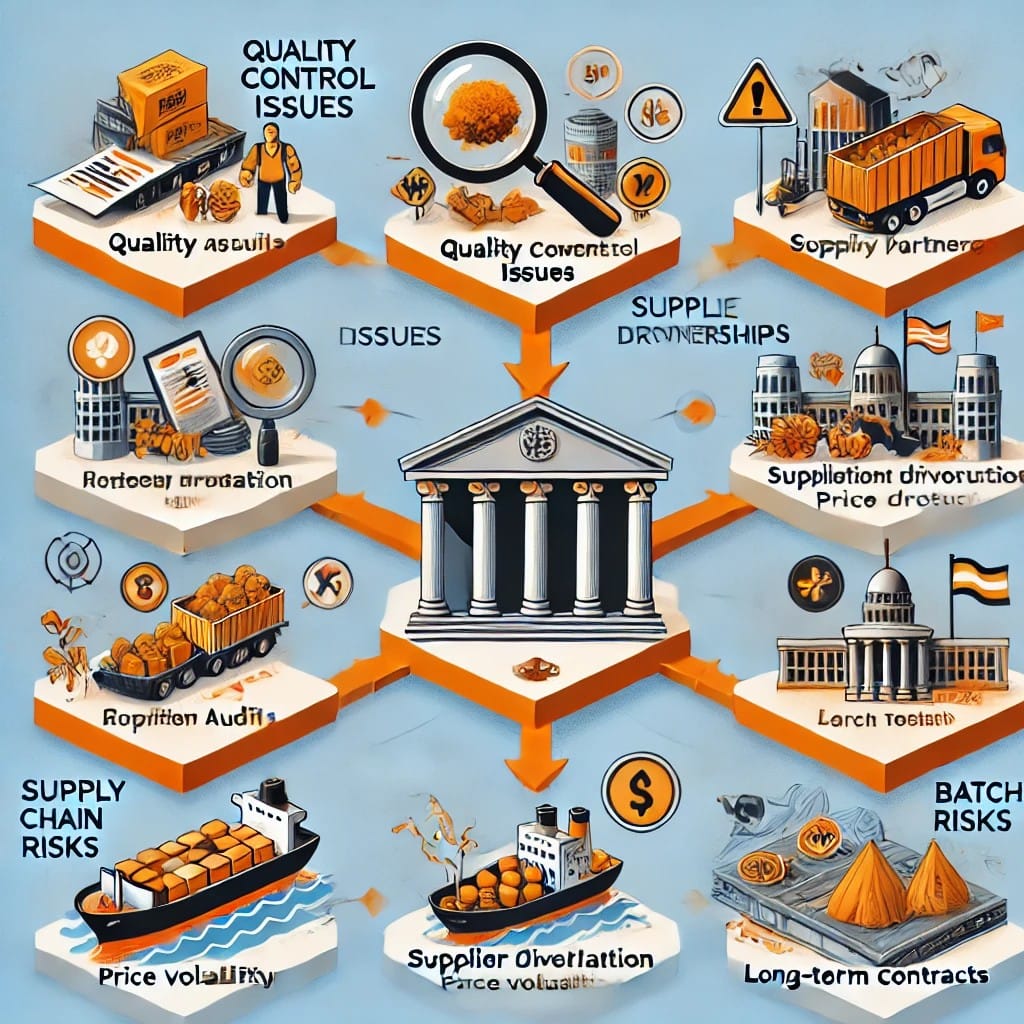
Challenges For Spice Importers: Guide To Overcome Them
The spice trade is both lucrative and challenging, with importers facing numerous obstacles in sourcing, quality control, logistics, and regulatory compliance. In a globalized market, understanding these challenges and knowing how to overcome them is crucial for success. This guide highlights the top challenges faced by spice importers in 2024 and provides actionable strategies to address them.
Common Challenges for Spice Importers
1. Fluctuating Spice Prices
- Market Volatility: Prices for key spices like black pepper, cardamom, and vanilla can fluctuate due to various factors such as supply shortages, changes in demand, and weather conditions.
- Impact: Price volatility can squeeze margins and lead to financial instability for importers who rely on stable pricing for cost predictions.
How to Overcome This Challenge:
- Diversify Suppliers: Work with multiple suppliers across different regions to minimize dependence on a single source.
- Contract Agreements: Lock in prices through long-term contracts to reduce exposure to market fluctuations.
- Risk Management: Hedge risks with financial tools like futures contracts or use forward pricing agreements to secure prices.
2. Supply Chain Disruptions
- Logistical Bottlenecks: Shipping delays, port congestion, and rising fuel costs can significantly impact the timely delivery of spices.
- Raw Material Shortages: Climate change and unpredictable weather patterns can lead to poor harvests, particularly for spices like saffron, cumin, and turmeric, affecting the supply chain.
How to Overcome This Challenge:
- Inventory Management: Maintain an optimal stock level and diversify sources to avoid stockouts during disruptions.
- Digital Tracking: Invest in digital supply chain solutions that provide real-time tracking and alerts for potential delays.
- Build Relationships with Multiple Suppliers: Work with multiple sources for critical spices to ensure backup options during supply chain disruptions.
3. Regulatory Compliance and Quality Assurance
- Stricter Regulations: Spice importers must navigate complex regulations around pesticide residues, food safety standards, and import/export laws, particularly in countries like the EU and US.
- Quality Control: Ensuring the quality of spices while meeting international standards for contaminants, allergens, and microbial levels is challenging.
How to Overcome This Challenge:
- Stay Updated on Regulations: Regularly review changes in regulations across key markets, such as the FDA in the U.S. and EFSA in the EU.
- Third-Party Certifications: Partner with suppliers that hold internationally recognized certifications like ISO, Fair Trade, USDA Organic, and GlobalGAP.
- Routine Testing: Implement regular lab testing for pesticide residues, heavy metals, and microbial contamination to ensure the quality and safety of imported spices.
4. Supply Chain Transparency and Traceability
- Lack of Transparency: Some spice suppliers may not provide clear information about the origin, production methods, or ethical practices, making it difficult for importers to verify product authenticity.
- Traceability Issues: Without clear traceability, importers may struggle to prove the sustainability and ethical sourcing of their spices, potentially harming their reputation.
How to Overcome This Challenge:
- Request Full Traceability: Work with suppliers who offer end-to-end traceability from farm to final product.
- Adopt Blockchain Technology: Some spice importers are leveraging blockchain technology to ensure the traceability of their products, enabling consumers to verify the origin and sustainability of the spices they buy.
- Transparency in Sourcing: Choose suppliers that practice transparency in their sourcing methods and are willing to provide certifications, audits, and third-party inspections.
5. Rising Competition in the Spice Market
- Global Competition: Spice importers face fierce competition not only from local suppliers but also from global suppliers offering lower prices.
- Price Sensitivity: Consumers are increasingly price-sensitive, and even slight price increases can lead to a loss of market share.
How to Overcome This Challenge:
- Differentiation: Focus on high-quality, organic, and sustainably sourced spices to create a niche in the market.
- Branding and Marketing: Build a strong brand that emphasizes ethical sourcing and premium quality to attract loyal customers.
- Customer Education: Educate customers about the benefits of organic spices and fair trade practices, helping them understand why premium prices are justified.
6. Technological Adaptation and Digital Transformation
- Lack of Digitalization: Many spice importers still rely on outdated methods for sourcing, managing inventory, and processing orders.
- E-commerce Integration: As more spice sales move online, importers must adapt to e-commerce trends and digital platforms to stay competitive.
How to Overcome This Challenge:
- Embrace E-Commerce: Build an online presence and sell directly to consumers or through online marketplaces like Amazon, Alibaba, and eBay.
- Utilize Supply Chain Software: Implement Enterprise Resource Planning (ERP) and inventory management systems to streamline operations and improve order fulfillment.
- Leverage Social Media: Use social media platforms to connect with consumers, promote products, and offer educational content about the health benefits of spices.
Frequently Asked Questions (FAQs)
Q1: What are the common challenges faced by spice importers?
- A1: The common challenges include fluctuating spice prices, supply chain disruptions, regulatory compliance, lack of traceability, and increasing competition from global suppliers. Additionally, technological adaptation and the need for digital transformation are significant hurdles.
Q2: How can spice importers manage fluctuating prices?
- A2: Spice importers can manage price volatility by diversifying suppliers, using contract agreements for stable pricing, and employing risk management tools like hedging or forward pricing agreements.
Q3: What strategies can help spice importers ensure product quality?
- A3: Importers can ensure product quality by working with certified suppliers, implementing regular lab testing, and maintaining strict quality control standards. Staying updated on regulatory changes and adhering to food safety standards is also crucial.
Q4: How can spice importers overcome supply chain disruptions?
- A4: Spice importers can overcome disruptions by maintaining optimal inventory levels, investing in digital supply chain solutions for real-time tracking, and building relationships with multiple suppliers to ensure a steady supply of spices.
Q5: What role does technology play in overcoming challenges in the spice trade?
- A5: Technology plays a critical role by enabling spice importers to digitize their operations, streamline supply chain management, integrate e-commerce platforms, and ensure traceability and transparency of spice sourcing through tools like blockchain.
Q6: How can spice importers compete in a crowded market?
- A6: Spice importers can compete by offering premium products like organic, sustainably sourced, and exotic spices, focusing on branding, and educating consumers about the benefits of ethically sourced spices. Building a strong online presence also helps capture a broader audience.
Conclusion
The global spice import market in 2024 presents several challenges that can seem daunting to even the most experienced traders. However, with the right strategies, Challenges For Spice Importers can be successfully navigated and can be turned into opportunities. By focusing on diversified sourcing, quality assurance, technological advancements, and regulatory compliance, importers can build resilience and ensure long-term success in an increasingly competitive and dynamic market.